For an exporter, the website is often the first meeting with a buyer. A sourcing manager in Europe, the US or the Middle East may find you through Google, a trade fair directory or a recommendation, and within a minute decide whether you are worth an email.
Unlike local customers, these buyers can’t visit your showroom or factory on a whim. Your website has to do that job for them. Here’s what they look for, and how to give it to them.
1. A clear answer to “what do you make?”
Buyers are busy and often compare many suppliers. Your homepage should say plainly what you manufacture or supply, for which markets, and what makes you different, whether that’s hand-knotted carpets, sustainable materials, large production capacity or custom designs.
Avoid long welcome messages and generic slogans. Lead with your product categories and your strengths.
2. A product catalogue they can actually use
Trade buyers want to browse ranges and shortlist quickly. A good exporter catalogue includes:
- Clear categories and filters (material, size, construction, collection).
- Several high-quality photos per product, including close-ups of texture and finish.
- Specifications: sizes, materials, weights, construction methods, colour options.
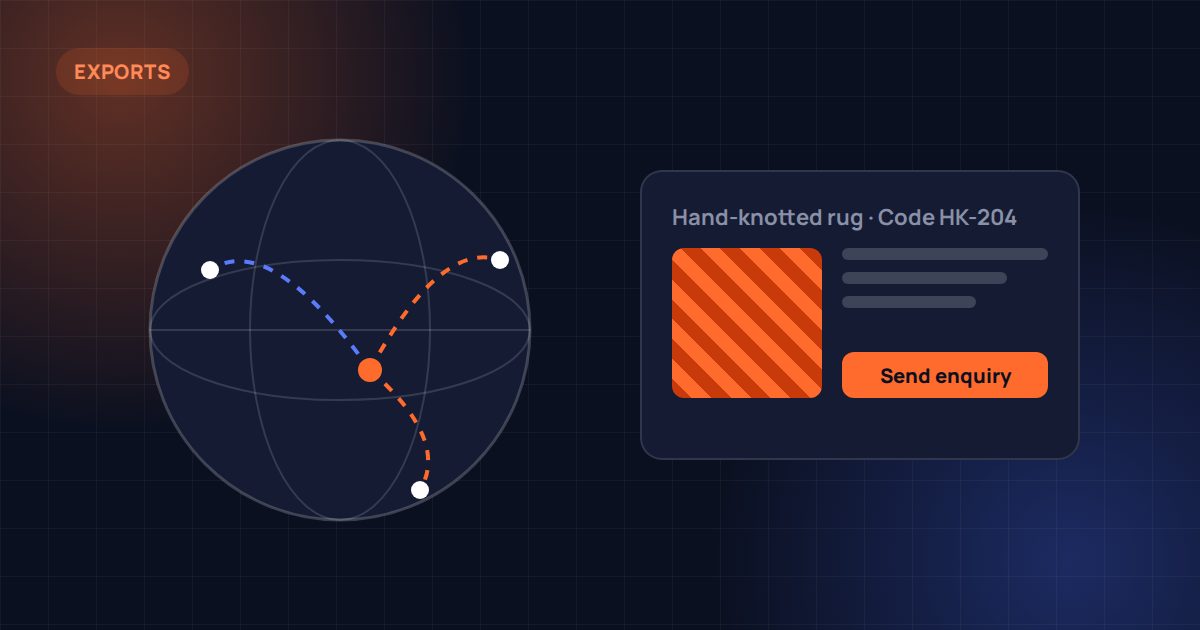
- Product codes they can quote in an enquiry.
- A simple “Enquire about this product” button.
You don’t need to show prices if you trade on quotes, but every other detail a buyer would ask in their first email should be on the page.
3. Proof that you are a real, capable manufacturer
Overseas buyers worry about reliability. Reduce that worry with:
- Photos and short videos of your factory, looms or workshop, and your team.
- Production capacity, lead times and minimum order quantities, where you can share them.
- Certifications, memberships of export councils and quality standards.
- Trade fairs you exhibit at, and markets you already supply.
Real photos of your own facilities build far more trust than stock images.
4. Easy, fast enquiries across time zones
When a buyer is ready to ask a question, make it effortless: a short enquiry form, a visible email address and a WhatsApp option. Enquiries often arrive while you are asleep, so consider an AI assistant that answers common questions about products, MOQ and shipping, and collects buyer details for your team.
5. Being found by buyers searching online
Buyers search in their own terms, such as “hand tufted rug manufacturer India” or “wholesale silver jewellery supplier”. Your website needs pages and content that match these searches, product structured data, and a technical set-up that search engines can crawl easily. If you sell into specific countries, pages written for those markets can help. Our SEO services focus on exactly this kind of trade search.
6. Speed and reliability from anywhere
A website hosted and built for local visitors may be slow overseas, especially with large image galleries. Optimised images, fast hosting and modern, lightweight code make sure a buyer in another continent sees your products quickly.
7. Catalogue content at scale
Large ranges mean hundreds of product descriptions. Writing them by hand takes months, and copying the same text everywhere hurts search visibility. Our AI content and catalogue service produces accurate, consistent descriptions at scale, reviewed by people before publishing.
A website that works like a sales team
The best exporter websites answer buyers’ questions before they ask, show proof of capability, and make it easy to start a conversation. That combination turns a website from an online brochure into a steady source of trade enquiries.
We have built websites for carpet, rug and textile exporters including Choudhary Exports, Cocoon Carpets, Azmas and Shivam Overseas. If you’d like your export website reviewed, get in touch.