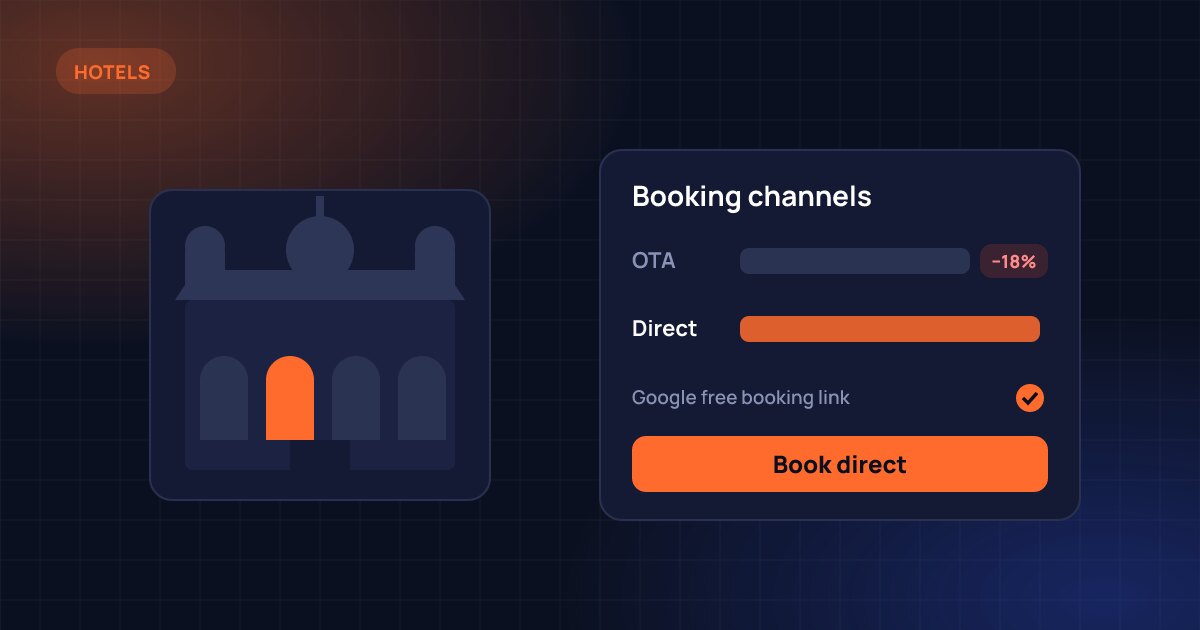
A guest finds your haveli on an OTA, books two nights, and arrives delighted. The OTA has already taken its cut. Next year, the same guest books again through the same OTA, because that’s where they found you. You pay commission twice for a guest who was already yours.
For heritage and boutique hotels in Rajasthan, this pattern quietly costs lakhs every year. This guide explains what OTA commissions really cost, and the practical steps that move more guests to your own website without losing the reach OTAs give you.
If you want the website basics first, such as speed, room pages and the booking flow, start with our guide on how hotel websites win more direct bookings. This article focuses on the commission problem itself.
What OTA commissions really cost
Commission rates vary by platform, contract and the promotions a hotel signs up for. Rates of 15% to 25% are common, and India’s hotel association FHRAI has complained of commissions running from about 18% up to 40% once extra visibility programmes are counted.
Here’s what that means for a typical heritage property. These figures are an example, not any particular hotel’s numbers:
| Example | |
|---|---|
| Average room rate | ₹6,000 per night |
| Average stay | 2 nights |
| Booking value (before tax) | ₹12,000 |
| Commission at 18% | ₹2,160 per booking |
| OTA bookings per month | 100 |
| Commission per month | ₹2,16,000 |
Moving just 20 of those 100 bookings to your own website saves about ₹43,000 a month, or over ₹5 lakh a year, before counting the payment gateway fee on direct bookings. That’s the budget for a better website, good photography and marketing, many times over.
Don’t try to quit OTAs
OTAs are not the enemy. They bring guests who would never have found a 40-room palace hotel in a small Rajasthan town, particularly international travellers who trust a familiar booking site. Many guests discover you on an OTA, then check your own website before booking.
The aim is a healthier mix: OTAs for discovery, your own website for repeat guests, guests who already know your name, weddings, groups and anyone who checks your site before booking.
1. Know your channel mix
You can’t improve what you don’t measure. Pull a report from your property management system or channel manager showing, for the last 12 months:
- Bookings and revenue by channel (each OTA, direct website, phone, walk-in, travel agents)
- Commission paid per channel
- Repeat guests, and which channel they booked through the second time
Most hotels are surprised by the last line. Repeat guests booking through an OTA are the easiest commission to save.
2. Give guests a reason to book direct
Many OTA contracts restrict how you price on other channels, so check yours before offering a lower rate. A common approach is the same price with more value for guests who book direct:
- Breakfast included, or a complimentary welcome drink
- A room upgrade when available
- Early check-in or late check-out
- A heritage walk of the property, a cooking demonstration or a village visit
- Free airport or railway station pickup for stays of two nights or more
State these clearly on every room page and next to the booking button: “Book direct and get…”. Guests comparing tabs notice.
3. Appear on Google with free booking links
When travellers search for your hotel by name on Google, they see a box with prices from OTAs. Your own website can appear there too, through Google’s free booking links. According to Google, hotels pay no fee for these listings and clicks are free.
To take part, your booking engine or channel manager needs to send live rates and availability to Google. Many reservation systems already offer this connection, so ask your provider first. It’s one of the cheapest ways to win back bookings from guests who already searched for your name.
4. Make your Google Business Profile do the selling
For a heritage hotel, the Google Business Profile is often seen by more people than the website. Keep it complete:
- The correct primary category, plus the amenities guests filter on (pool, parking, restaurant, wedding venue)
- Plenty of recent photos: rooms, courtyards, dining, the façade at night
- Your own website as the booking link
- Replies to every review, in a warm and personal tone
Our local SEO work covers exactly this, and Hotel schema markup helps Google and AI assistants understand your property’s address, amenities and check-in details.
5. Tell the story OTAs can’t
An OTA listing shows the same template for every property: photos, amenities, reviews. Your website can tell your hotel’s story, and for heritage properties the story is what guests are paying for.
- The history of the property and the family behind it
- The architecture: frescoes, jharokhas, the durbar hall, the stepwell
- Experiences: dinners on the terrace, folk music, camel or jeep safaris, village walks
- Nearby places worth the trip, written from a local’s point of view
These pages also bring in guests who are still planning, people searching for “heritage hotel near Jaipur” or “palace hotel for a weekend from Delhi”, before an OTA ever sees them.
6. Take weddings, groups and events direct
Rajasthan is one of India’s busiest destination wedding regions. Wedding and group bookings are high in value and almost always need a conversation first, so they’re ideal for direct bookings.
Give them a dedicated page with venue spaces, capacities, room blocks, catering and real photos from past events, and a short enquiry form that asks for dates, guest count and budget. Answer within hours, not days.
7. Keep the guest after the first OTA stay
Once an OTA guest arrives, they are your guest. Within your OTA contract and data protection rules:
- Invite guests to join your WhatsApp list or newsletter at check-in, in exchange for a perk on their next direct stay
- Leave a card in the room with your website and the direct-booking benefit
- Send a thank-you message after checkout with a returning-guest offer
The aim is simple: the second stay should be booked direct.
8. Answer questions instantly, especially at night
Guests from abroad often plan at night, Indian time. If their question about parking, pickup or the pool goes unanswered until morning, they book wherever is easiest, usually an OTA.
Show a WhatsApp button on every page, and consider an AI assistant on your website and WhatsApp that answers common questions any time and hands the guest to your reservations team when they’re ready.
9. Get the price display right
Guests drop off when the final price is higher than expected. Since 22 September 2025, hotel rooms priced at ₹7,500 or less per night attract 5% GST (without input tax credit) and rooms above ₹7,500 attract 18%. Make sure your booking engine applies the correct rate for each room and shows the total, including taxes, before the payment step.
What to expect
Moving bookings from OTAs to your own website is gradual. Repeat guests, weddings and guests who search for you by name usually move first. Over a season or two, a hotel that does the steps above should see its direct share rise and its commission bill fall.
How we help hotels
We’ve built websites for hotels including the Dangayach Group’s properties, among them Ramada Jaipur and Chomu Palace Hotel, a heritage property where we also set up the online reservation system. See our work and our hotels and travel page.
If you’d like a direct-booking review of your hotel website, including your Google listing and booking flow, get in touch and we’ll send practical next steps.